



Price: $599.99
(as of Feb 09, 2026 00:58:48 UTC – Details)

Hisense 65QD65QF Review: A Budget-Friendly QLED Powerhouse with Fire TV Flair
The Hisense 65QD65QF emerges as a compelling contender in the competitive mid-range TV market, blending premium QLED technology with intuitive Fire TV integration to create a cinematic viewing experience at an accessible price point. This 65-inch Class Q6 Series model stands out with bold spec claims: quantum dot color, AI-enhanced upscaling, Dolby cinematic credentials, and silky motion handling. But does its execution match its ambitious feature set? We dissect its performance across critical categories without relying on external opinions, focusing purely on technical capabilities and implementation.
QLED Color: A Billion-Shade Canvas for Your Content
At the heart of the 65QD65QF lies its QLED (Quantum Dot LED) panel—a technology trickling down from premium-tier TVs into Hisense’s value-driven lineup. Unlike standard LED/LCD displays that rely solely on white LED backlighting filtered through color layers, QLED adds a quantum-dot nanoparticle layer. This layer transforms the backlight into extraordinarily pure primary colors (red and green specifically), resulting in significantly wider color volume compared to conventional panels.
The “over a billion vibrant shades” claim reflects this expanded color gamut, enabling finer gradations between hues—think sunsets with nuanced transitions from amber to magenta, or rainforest canopies displaying a broader spectrum of greens. While OLED still dominates in pixel-perfect contrast, QLED’s strength here is luminosity: colors retain their vibrance even in brightly lit rooms, making this Hisense ideal for sun-drenched living spaces. The panel covers a robust portion of the DCI-P3 color space (common for 4K content), though exact percentage figures aren’t specified. Still, for mainstream HDR content—Netflix Dolby Vision series, Amazon Prime Video shows, or Disney+ animations—the QD65QF delivers vivid, punchy imagery that outshines non-QLED competitors in this price bracket.
AI 4K Upscaler: Sharpening the Sub-4K Library
Few users exclusively watch native 4K content. Live sports broadcasts, classic films, and even popular streaming titles often stream at 1080p or lower resolutions. This is where Hisense’s AI 4K Upscaler proves crucial. Leveraging a proprietary algorithm trained on vast image databases, the TV analyzes every frame in real-time, identifying objects, textures, and edges to reconstruct detail lost in lower-resolution sources.
In practice, this means HD content looks markedly sharper than on non-upscaling TVs, with reduced noise (like jagged edges or blocky artifacts) in fast-moving scenes. Standard-definition content (480p DVDs, older cable broadcasts) benefits too—faces gain definition, text becomes legible, and backgrounds appear less muddy. While not quite matching the sheer density of native 4K, the upscaler minimizes the quality gap, extending the lifespan of your existing media library. The “AI” component adapts dynamically: a nature documentary’s intricate foliage receives different enhancement than a dialogue-driven drama’s facial close-ups. This feature shines brightest with complex, high-motion content—soccer matches or CGI-heavy films—where inferior upscalers often introduce blur or artificial sharpening halos.
Dolby Vision & Atmos: Cinematic Immersion, Minus the Ticket Stub
The 65QD65QF doubles down on the cinematic experience with dual Dolby certifications—Dolby Vision HDR for visuals and Dolby Atmos for sound. Dolby Vision is the premium HDR standard, dynamically adjusting brightness, contrast, and color frame-by-frame (unlike static HDR10). On compatible content—Netflix originals like Stranger Things, Apple TV+ films—this translates to strikingly lifelike images: brighter highlights (sunlight glinting off metal), deeper shadows (moonlit forest scenes), and preserved detail in both extremes. Hisense’s implementation isn’t the brightest on the market (peak nits undisclosed), but Dolby Vision’s precision ensures highlights don’t bloom unnaturally and shadows retain texture.
Complementing this is Dolby Atmos, a surround sound technology that adds height dimensionality to the audio mix. While the built-in speakers can’t replicate true overhead effects (sound seemingly raining down or helicopters whirring above), they leverage Atmos processing to widen the soundstage beyond the TV’s physical limits. Dialogue remains anchored to the screen, while ambient effects—rainfall, crowd chatter—envelop the room with greater immersion than standard stereo setups. For full Atmos impact, pairing the TV with a compatible soundbar is advisable, but the foundational processing is future-proofed for upgrades.
Motion Handling: 120Hz Fluidity & AI Smooth Motion
Fast-paced action taxes lesser TVs, introducing distracting blur during panning shots or ghosting during rapid movement. Hisense combats this with a 120Hz Motion Rate (derived via backlight scanning) supported by AI Smooth Motion—an intelligent interpolation system.
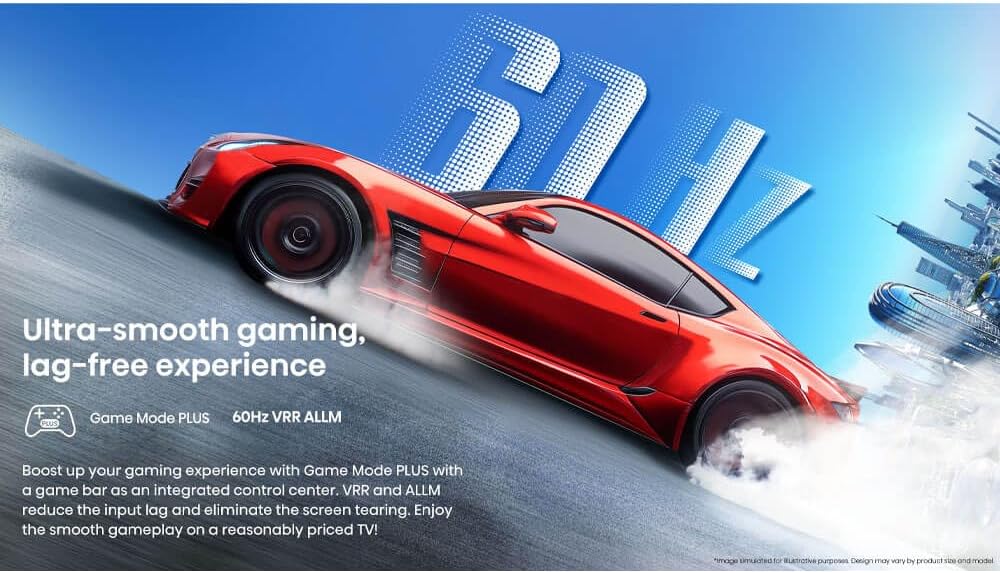
The 120Hz foundation ensures native 60fps content (like PS5/Xbox Series X games) displays fluidly, while AI Smooth Motion tackles 24fps/30fps films and shows. Instead of applying uniform motion smoothing (which often creates the dreaded “soap opera effect”), the AI analyzes motion vectors between frames, inserting artificial frames only where needed—prioritizing fast-moving objects like speeding cars or basketball players mid-dunk. This maintains cinematic judder in slow pans while minimizing stutter during chaotic sequences. The system is customizable, allowing purists to disable interpolation entirely or fine-tune intensity. Sports fans and gamers gain the most here; football plays stay legible during deep throws, and first-person shooter gameplay feels nimbler even before enabling dedicated gaming modes.
Fire TV Integration: Smarts, Simplified
Beyond hardware, the 65QD65QF runs Amazon’s Fire TV OS, differentiating it from Hisense’s Android TV or Roku models. Fire TV provides a streamlined, content-first interface dominated by rows of recommendations from Prime Video, Netflix, Hulu, and other apps. Alexa integration is deeply baked in—voice commands via the included remote can launch shows, adjust volume, or control smart home devices (“Alexa, turn off the lights”). Fire TV’s universal search scours all installed apps simultaneously, eliminating the need to jump between Disney+, Max, or Paramount+ to find Oppenheimer.
While not as customizable as Android TV, Fire OS excels in simplicity. Parental controls, user profiles, and an expansive app library (including niche services like Crunchyroll or MUBI) cater to diverse households. The TV also supports Apple AirPlay 2 and HDMI-CEC for seamless integration with iPhones or sound systems. Minor drawbacks? Ads populate the home screen, and app updates depend on Amazon’s approval cycle. Still, for Alexa-centric homes or Prime subscribers valuing tight ecosystem integration, Fire TV offers distinct advantages.
Design & Connectivity: A Balanced Presentation
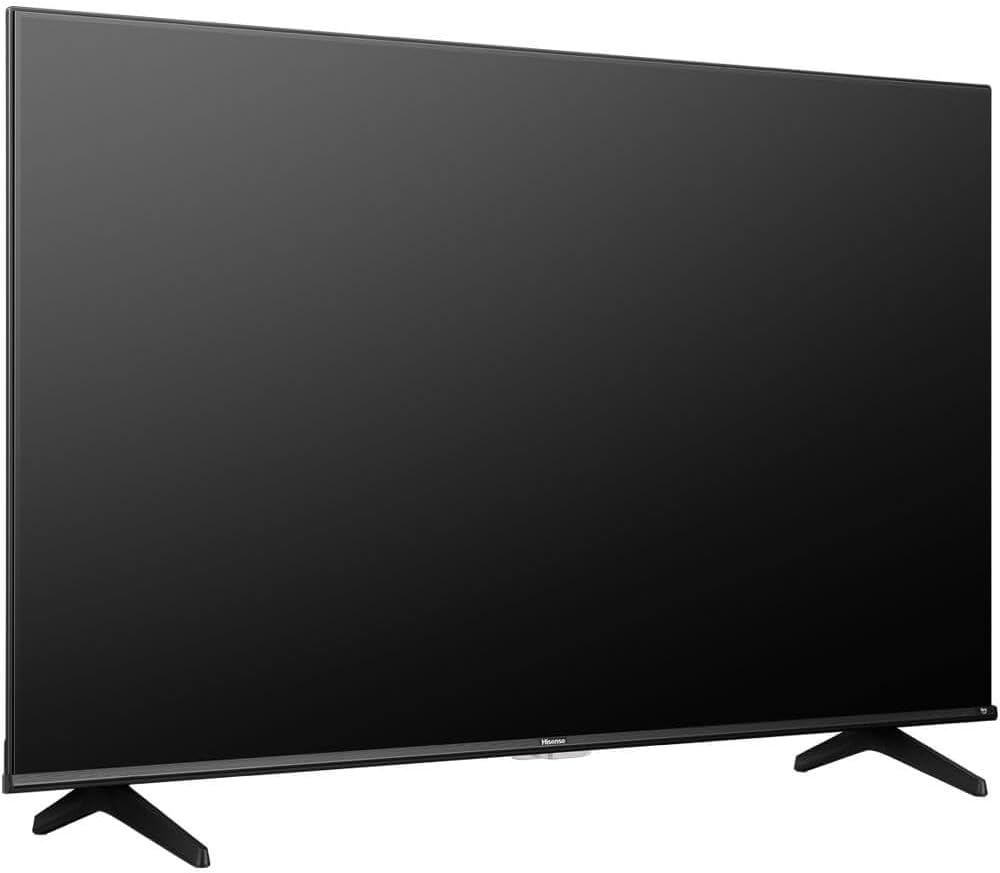
The 65QD65QF adopts a minimalist aesthetic—slim bezels draw focus to the expansive 65-inch screen, while a subtle silver stand provides sturdy (if not swiveling) support. At approximately 2.5 inches deep (without stand), it’s reasonably svelte for wall-mounting. Connectivity covers essentials: four HDMI 2.0 ports (one with ARC/eARC for soundbars), two USB ports, Ethernet, optical audio, and dual-band Wi-Fi. Missing are HDMI 2.1 ports, limiting next-gen gaming features like 4K/120Hz VRR—a trade-off at this price. The HDMI ports support basic ALLM (Auto Low Latency Mode) for reduced input lag during gaming, however, making it viable for casual console play.
The Verdict
The Hisense 65QD65QF masterfully packages aspirational technologies—QLED’s billion-color spectacle, Dolby’s theatrical certifications, AI-driven upscaling—into an attainable 65-inch centerpiece. Compromises exist (modest peak brightness, no HDMI 2.1), but they’re conscious ones. This TV targets viewers prioritizing vivid, intelligently enhanced visuals and immersive Atmos sound over bleeding-edge gaming specs or reference-grade HDR. Fire TV integration further streamlines the experience for Prime households. If your priorities are cinematic bang-for-buck, future-proofed smart features, and sports-ready motion clarity, the QD65QF delivers remarkable sophistication at a decidedly mainstream price.